
Fiber and Bone Health: Can Eating More Fiber Help Protect Your Bones?
July 26, 2026 | Liz Weiss
Calcium and vitamin D have long been recognized as key nutrients for bone health. Now, emerging research suggests that fiber may also play an important role.
While dietary fiber is best known for supporting digestive health, heart health, healthy cholesterol levels, blood sugar management, and regularity, new evidence suggests it may also help support healthy bones.
A 2025 systematic review and meta-analysis published in the European Journal of Nutrition found that adults with higher dietary fiber intakes tended to have higher bone mineral density (BMD), an important measure of bone strength and a predictor of osteoporosis risk.
While this study doesn’t prove that fiber prevents osteoporosis, it adds to a growing body of evidence suggesting that diets higher in fiber are associated with better bone health.
How Can Fiber Support Bone Health?
The connection starts in your gut.
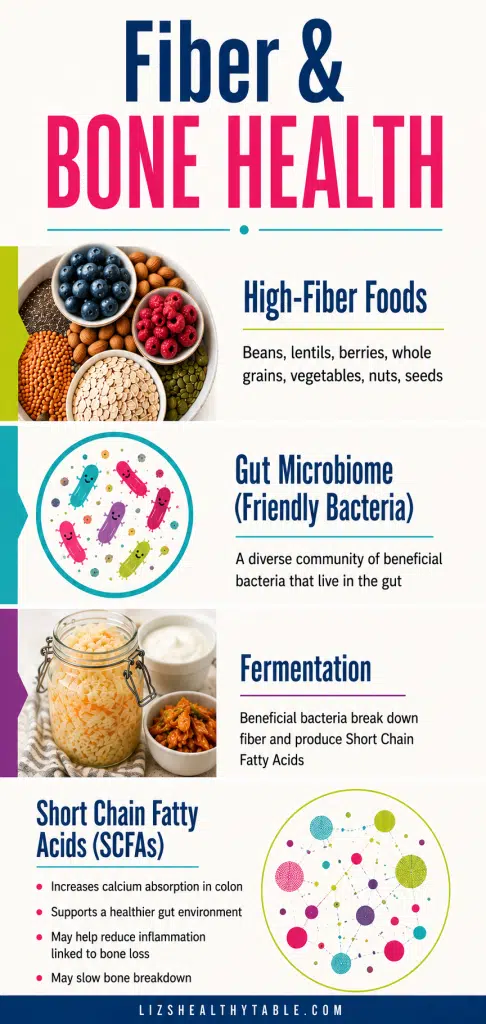
When you eat fiber-rich foods like beans, lentils, whole grains, fruits, vegetables, nuts, and seeds, much of that fiber isn’t digested in the small intestine. Instead, it travels to the colon, where it’s fermented, or broken down, by beneficial gut bacteria.
As these bacteria break down fiber, they produce compounds called short-chain fatty acids (SCFAs), including acetate, propionate, and butyrate. Researchers believe these compounds may help support bone health by:
- Increasing calcium absorption in the colon
- Supporting a healthier gut environment for nutrient absorption
- Reducing inflammation that may contribute to bone loss
- Slowing the activity of osteoclasts, the cells responsible for breaking down bone
Scientists call this relationship the gut-bone axis, and it’s one of the most exciting emerging areas of nutrition research. While researchers are still uncovering exactly how the gut microbiome influences bone health, the evidence suggests that eating a diet rich in fiber supports not only your digestive health, but potentially your skeleton as well. (I first learned about the gut-bone axis at a nutrition conference in Panama earlier this year. The speaker, Kristie Canene-Adams, PhD, from Ingredion, provided a deep dive into fiber’s role in healthy aging during her presentation on Nutrition’s Secret Weapon: Supporting Healthy Aging, One Bite at a Time.)
The Best High-Fiber Foods for Bone Health
The good news? Many of the foods that support gut health are already nutritional powerhouses. Eating a variety of plant foods not only feeds beneficial gut bacteria but also provides vitamins, minerals, antioxidants, and phytonutrients that support overall health.
Some of the best high-fiber foods include:
- Beans, including black beans, chickpeas, kidney beans, cannellini beans, and Great Northern beans
- Lentils
- Edamame
- Split peas
- Oats
- Barley
- Whole grains
- Raspberries
- Pears
- Apples
- Avocados
- Broccoli
- Brussels sprouts
- Sweet potatoes
- Chia seeds
- Ground flaxseed
- Almonds and other nuts
Many of these foods also provide nutrients that support healthy bones, including magnesium, potassium, calcium, phosphorus, and vitamin K. (To learn more about the nutrients that support healthy bones, check out my post on: Osteopenia: How Nutrition, Exercise, and Lifestyle Can Protect Your Bones). In fact, many of these nutrients come together in my Dense Bean and Edamame Salad, making it an easy and delicious way to eat more fiber.

How Much Fiber Do You Need Each Day?
The researchers didn’t identify a specific amount of fiber needed to support bone health. Instead, they based their analysis on the World Health Organization’s recommendation that adults consume at least 25 grams of dietary fiber per day.
Unfortunately, most Americans fall well short of that goal.
The good news is that increasing your fiber intake doesn’t have to happen overnight. Small changes can make a meaningful difference. Add beans to soups and salads, choose whole grains instead of refined grains, snack on whole fruit instead of drinking juice, or sprinkle nuts, chia seeds or ground flaxseed on yogurt or oatmeal.
If you’re looking for more ideas, be sure to check out my Ultimate Fiber Guide, where you’ll find a comprehensive list of high-fiber foods, practical shopping tips, and easy ways to reach your daily fiber goals. (U.S. guidelines recommend 25 grams a day for women and 38 for men.)
An Easy Way to Eat More Fiber
Nutrition research is helpful, but what really matters is what ends up on your plate.
If you’re looking for an easy way to eat more fiber, beans are a great place to start. They’re inexpensive, incredibly versatile, and one of the best sources of dietary fiber.
That’s one reason I love the dense bean salad trend. It’s an easy, flavorful way to enjoy more beans without feeling like you’re eating “health food.”
I created my Dense Bean and Edamame Salad with that in mind. Packed with beans, vegetables, fresh herbs, and other fiber-rich ingredients, it delivers 7 grams of fiber per serving. Whether you enjoy it as a vegetarian lunch or pair it with grilled shrimp, rotisserie chicken, salmon, or tofu, it’s a delicious way to put the science into practice.
→ Get the recipe for my Dense Bean and Edamame Salad
The Bottom Line
We still have plenty to learn about the connection between fiber and bone health, but the research continues to point in one direction: eating more fiber-rich foods is a smart investment in your health.
Fiber is much more than a digestive health nutrient. From supporting your gut microbiome and heart to helping manage blood sugar and potentially strengthening your bones, it continues to prove its value as part of a healthy eating pattern.
Of course, fiber is just one piece of the bone health puzzle. A balanced diet that includes adequate calcium, vitamin D, protein, and other essential nutrients, along with regular weight-bearing and resistance exercise, remains the foundation for building and maintaining strong bones.
Key Takeaways
- New research suggests an association between higher fiber intake and better bone health.
- Fiber feeds beneficial gut bacteria that produce short-chain fatty acids, compounds that may help support healthy bones.
- High-fiber foods like beans, lentils, fruits, vegetables, whole grains, nuts, and seeds nourish both your gut microbiome and your skeleton.
- The researchers based their analysis on the World Health Organization’s recommendation of at least 25 grams of fiber per day.
- Eating more fiber-rich foods is a simple, delicious habit that supports your gut, heart, blood sugar, and may even benefit your bones.
